Wondering whether a brand-new home in Mesa is worth it, or if an established neighborhood gives you more of what you want? You are not alone. Many Mesa buyers are weighing newer southeast communities against older central areas, especially now that price points can overlap more than people expect. In this guide, you will see how new construction and established neighborhoods compare on cost, lot size, commute patterns, maintenance, and move-in timing so you can choose the path that fits your life best. Let’s dive in.
Mesa Market Snapshot
Mesa’s housing market gives you options on both sides of the new-versus-established debate. In May 2026, Redfin reported a median sale price of $454,728, while Zillow’s home value index showed an average home value of $436,451, with homes going pending in about 27 days.
That matters because Mesa’s new construction is not limited to luxury pricing. Current new-home communities range from entry-level options under $500,000 to homes well above $650,000, which means some buyers may find real overlap between resale homes and new builds depending on location, size, and features.
Mesa’s housing stock also has a clear geographic split. Newer communities are concentrated more heavily in east and southeast Mesa, especially near the 85212 corridor, while older central neighborhoods reflect Mesa’s earlier subdivision patterns and historic development.
New Construction in Mesa
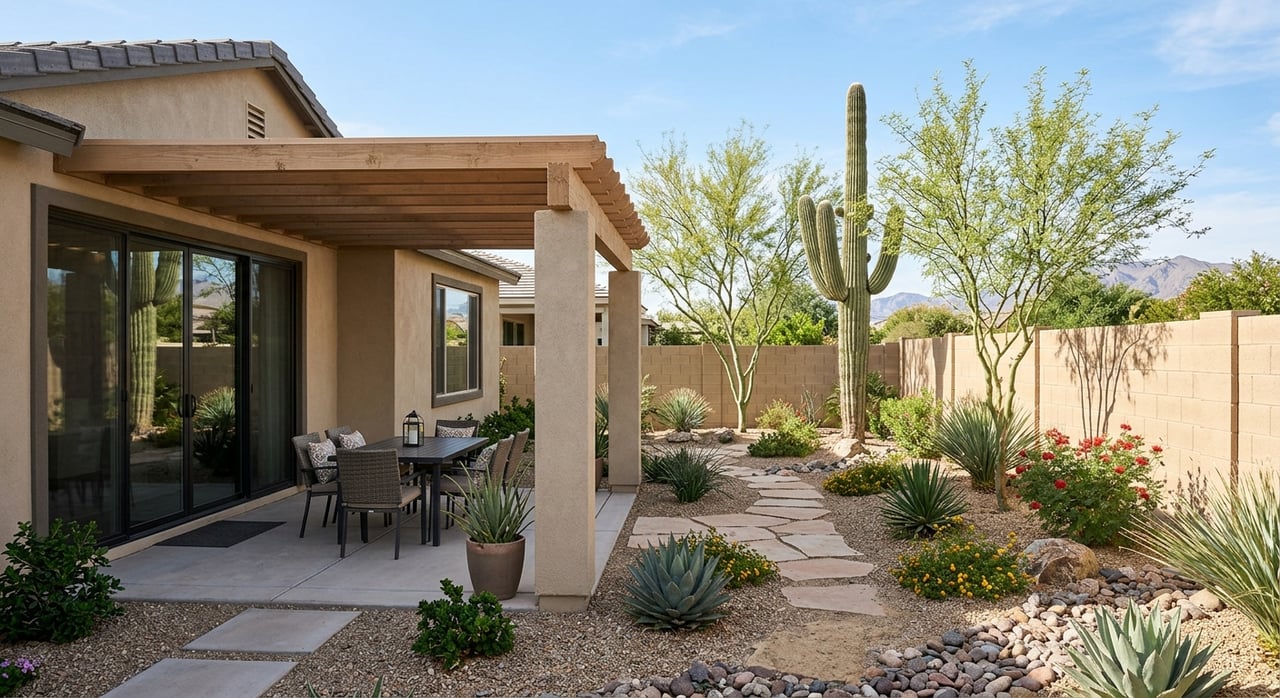
If you want a home with a modern layout, newer finishes, and fewer immediate repair projects, new construction may feel like the easier path. Mesa’s current new-home communities offer a wide spread of sizes and price points, which gives buyers more flexibility than they may expect.
Examples in the current market include Rialta from $449,990 with roughly 1,404 to 2,683 square feet, Hawes Crossing communities from about $471,990 to $600,990, Avalon Crossing Inspiration from $488,990, Ascent at Avalon Crossing from $560,990, and Emblem at Avalon Crossing from $659,990.
What You Usually Get
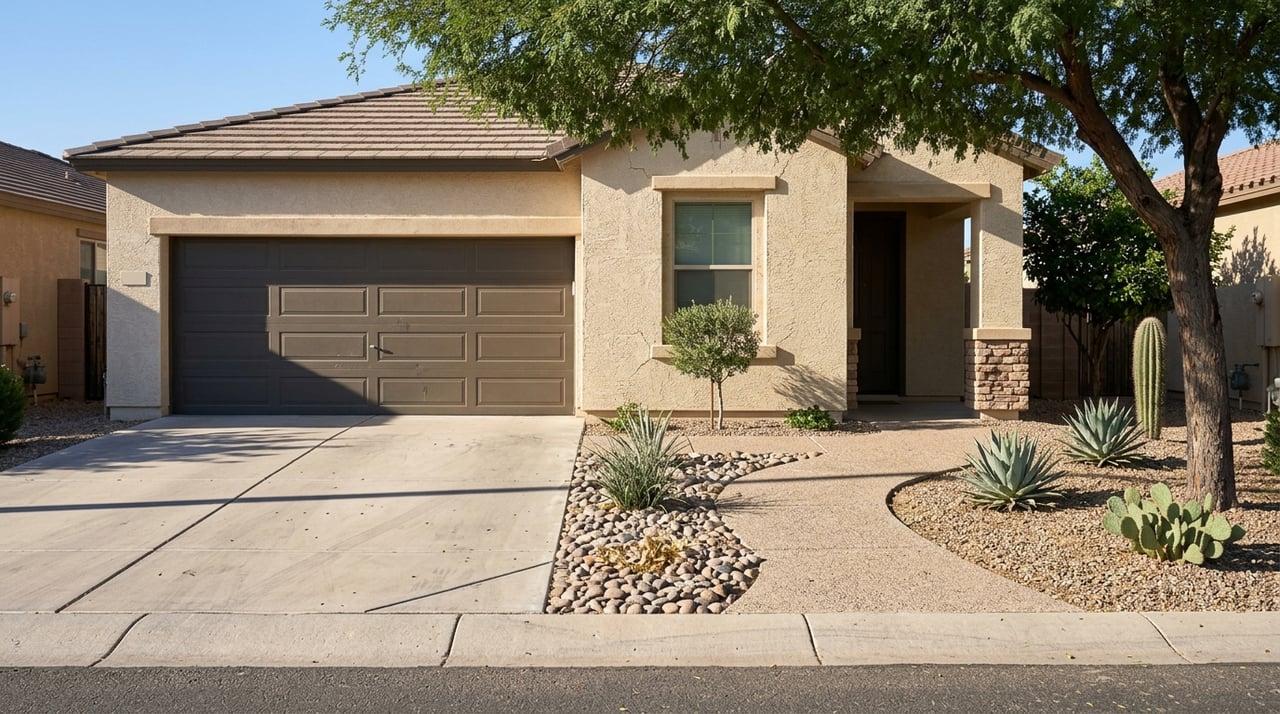
Many Mesa new-home communities focus on modern finishes and packaged convenience. Standard or promoted features in some communities include granite countertops, stainless appliances, tile or wood-plank tile floors, front-yard landscaping, and optional energy-efficient upgrades.
Shared amenities are also a big part of the appeal. Depending on the community, you may find parks, pools, playgrounds, and pickleball courts, which can add value for buyers who want neighborhood amenities without maintaining those features on their own property.
Lot Sizes and Yard Tradeoffs
One of the biggest tradeoffs with newer Mesa homes is often the lot. Current examples show that homesites can be compact, with some communities built on 30-foot-wide, 40-foot-wide, or 50-foot-wide homesites.
In practical terms, that can mean a more efficient use of space and less yard work, but it can also mean less private outdoor area. If a large backyard is high on your list, this is one area where you will want to compare carefully before deciding.
Energy Efficiency and Newer Systems
New construction can also make it easier to get updated efficiency features from day one. The ENERGY STAR program notes that certified new homes typically include features like quality-installed insulation, high-performance windows, better-sealed building envelopes, and efficient HVAC systems.
Not every new Mesa home will carry the same certification or efficiency label, but builders are generally in a better position to package these features into a home from the start. For you, that may mean fewer upgrade projects right after move-in.
Build Time and Quick Move-In Options
A new build does not always mean waiting a year, but timing can vary. Builder guidance cited in the research shows average construction timelines ranging from about four to five months after pre-construction steps, with many estimates landing between six and 12 months depending on the community and the home.
Some Mesa communities also offer quick move-in homes that may be ready in as little as 90 days. If your timeline is tight, that can give you a middle ground between a resale purchase and a fully ground-up build.
Warranty Coverage and Limits
Builder warranty coverage is another reason buyers consider new construction. FTC guidance says new-home warranties often cover workmanship and materials on different timelines, commonly around one year for many components, two years for HVAC, plumbing, and electrical, and sometimes 10 years for major structural defects.
Still, it is important to read the fine print. Warranties usually do not cover everything, and they may exclude appliances or out-of-pocket costs such as moving expenses or temporary housing during repairs.
Watch for CFD Costs
In some master-planned areas, monthly ownership costs can be higher than buyers first expect. The City of Mesa says Eastmark and Cadence Community Facilities Districts were created to fund improvements such as parks, roads, sewer, water, storm drainage, street lights, landscaping, and related infrastructure.
Those bond costs are assessed to property owners within the CFD. If you are comparing a new home to an older resale, this is one of the most important line items to review because it can materially affect your monthly budget.
Established Neighborhoods in Mesa
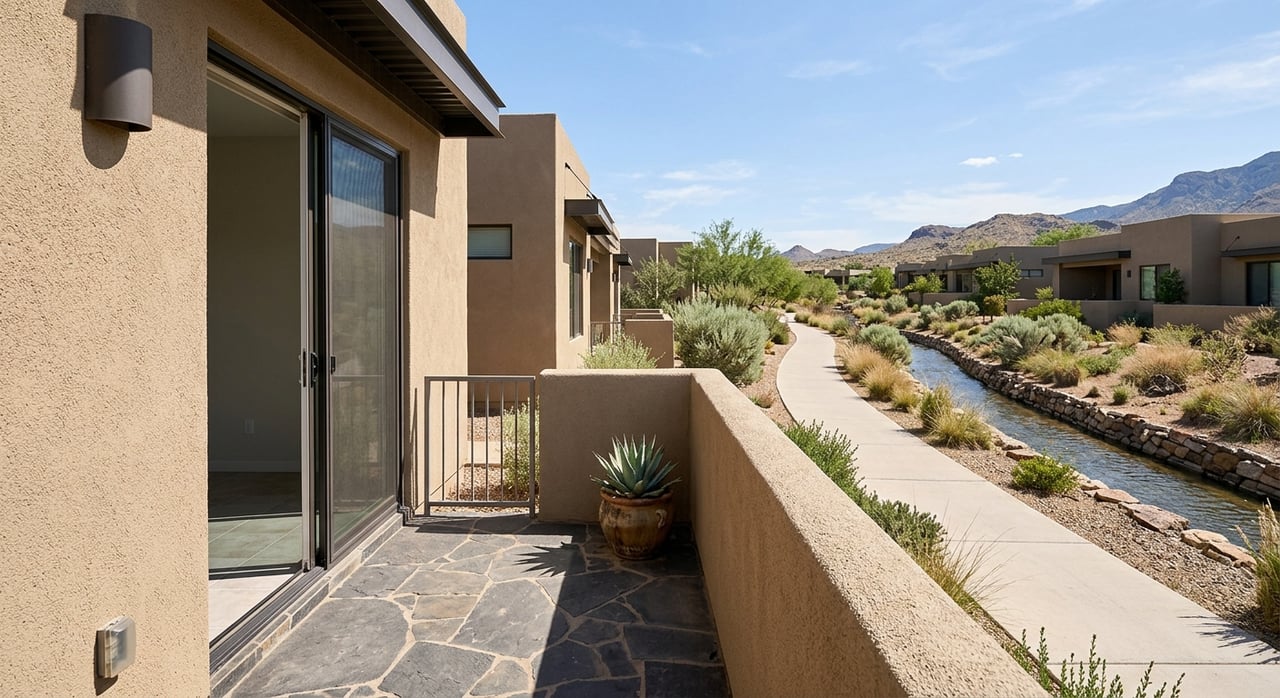
If your priorities include larger lots, mature landscaping, or a more established streetscape, older Mesa neighborhoods may stand out right away. Central Mesa has development patterns that look very different from newer southeast subdivisions.
The city describes the predominant Mesa neighborhood pattern as suburban, with many lots ranging from 6,000 to 18,000 square feet. In some historic areas, lot sizes are even larger. Fraser Fields, for example, was developed with lots of at least two-thirds of an acre and still reads as a large-lot area today.
More Yard and Mature Trees
For many buyers, the biggest draw of an established neighborhood is outdoor space. Larger lots can give you more flexibility for gardens, play areas, storage, entertaining, or simply more breathing room between homes.
Mature trees and established landscaping also create a different feel from newer communities. That is hard to replicate in a brand-new subdivision, even when the house itself has the latest finishes.
Character and Streetscape
Several central Mesa historic districts preserve the city’s earlier architectural and neighborhood patterns. Areas such as Robson, Glenwood/Wilbur, and West Second Street reflect different phases of Mesa’s growth, including older homes, distinct lot layouts, and long-standing streetscape features like citrus-lined medians in West Second Street.
That does not mean every established neighborhood is historic, but it does show the range of character available in older parts of Mesa. If you care about a home feeling distinct rather than newly standardized, this can be a major advantage.
Commute and Access Patterns
Location may be the deciding factor for many buyers. Mesa’s established core is tied more closely to transit corridors, with Valley Metro’s A Line serving Phoenix, Tempe, and Mesa, and the Downtown Mesa area connected near Country Club Drive and Main Street.
By contrast, newer southeast Mesa communities are often more freeway-oriented, with planning materials emphasizing access to US 60, Loop 202, and SR 24. If you want rail and downtown access, older central Mesa may fit better. If you drive most places and want freeway convenience, newer areas may be more practical.
Maintenance and Update Costs
Established homes often offer more lot space and neighborhood character, but they may also come with a longer repair list. The CFPB notes that homeowners are responsible for maintenance and repairs, and resale buyers should be prepared for inspections, repair negotiations, and update budgets before closing.
That does not mean an older home is a poor choice. It simply means you should evaluate roof age, HVAC condition, plumbing, windows, and possible remodeling needs as part of the full cost picture.
New vs. Established: What Matters Most
The better choice usually comes down to your priorities, not just the year the home was built. In Mesa, both paths can work well, but they solve different problems.
Here is a simple side-by-side view:
| Factor | New Construction | Established Neighborhoods |
|---|---|---|
| Home style | Modern layouts and finishes | More varied architecture and character |
| Lot size | Often smaller and more compact | Often larger, with more yard space |
| Landscaping | Newer, lighter, more uniform | Mature trees and established yards |
| Maintenance | Typically lower at first | Often more repairs and updates to plan for |
| Amenities | Shared amenities may be included | Amenities vary by area |
| Commute pattern | Often freeway-oriented | Often closer to transit and downtown corridors |
| Timing | Build timelines may apply | Usually faster move-in on resale |
| Extra costs | CFD assessments may apply in some areas | Different cost structure, often fewer master-plan district fees |
How to Choose in Mesa
If you are deciding between new construction and an established neighborhood, focus on the factors that affect your daily life and monthly budget the most. A beautiful kitchen matters, but so do your commute, yard needs, and how much maintenance you want to take on.
Start with these questions:
- Do you want a move-in-ready home with modern finishes?
- Is a larger lot or mature landscaping important to you?
- Would you prefer freeway access or proximity to transit and downtown Mesa?
- Are you comfortable waiting for a build, or do you need to move sooner?
- Have you compared total monthly costs, including possible CFD assessments?
- Are you ready for repairs or updates if you buy an older resale home?
For many buyers, the answer is not simply new versus old. It is about choosing the right mix of location, cost, condition, lot size, and timing.
The Bottom Line for Mesa Buyers
Mesa gives you a rare kind of flexibility. You can find brand-new communities with modern features in southeast Mesa, or you can explore older neighborhoods with larger lots, mature trees, and easier access to central corridors.
If you want predictable first-year maintenance, warranty coverage, and newer design, new construction may be the better fit. If you want more land, a more established streetscape, and a different commute pattern, an older neighborhood may offer more value for the way you live.
The key is comparing the full picture, not just the list price. If you want help sorting through Mesa neighborhoods, builder communities, resale options, and the real monthly cost of each path, Robyn Combs can help you narrow it down with local insight and responsive guidance.
FAQs
What is the price range for new construction homes in Mesa?
- Current Mesa new-home options in the research ranged from about $449,990 to well above $650,000, depending on the community, size, and homesite.
Are Mesa new construction lots usually smaller than older neighborhood lots?
- In many current Mesa communities, yes. Examples in the research included 30-foot, 40-foot, and 50-foot-wide homesites, while many older Mesa lots range from 6,000 to 18,000 square feet.
What are CFD costs in Mesa new-home communities?
- In some master-planned areas such as Eastmark and Cadence, Community Facilities District assessments help fund infrastructure and related improvements, and those costs are assessed to property owners.
Are established Mesa neighborhoods better for transit access?
- Central Mesa is generally more connected to transit corridors and Downtown Mesa, while many newer southeast Mesa communities are more oriented around freeway access.
How long does a new construction home take in Mesa?
- Build timing varies by builder and community, but the research showed estimates ranging from about four to five months after pre-construction steps to six to 12 months, with some quick move-in homes ready in as little as 90 days.
What should Mesa buyers expect with an older resale home?
- Older resale homes may offer larger lots and more established streetscapes, but you should also plan for inspections, possible repair negotiations, and update budgets before closing.